 hb2k.com – Daily Briefings & General Coverage
 hb2k.com – Daily Briefings & General Coverage

Since its inception in 1877, Wimbledon has stood as the oldest and arguably the most prestigious tennis tournament in the world. Integral to its celebrated identity is a rigorous dress code, mandating that participants' attire be predominantly white, allowing only a mere 10mm of colored trim.
The tradition of wearing all white at Wimbledon can be traced back to the 1870s, during the Victorian era. At that time, any visible sign of perspiration was deemed unseemly and improper.
The primary aim of the all-white rule was to minimize the visibility of sweat marks and help players stay cool during the summer months. Over time, this practical consideration evolved into a defining characteristic of Wimbledon's rich tradition and history. While generally strict, the rules have undergone occasional revisions to adapt to modern sensibilities.
Several influential figures in tennis, including Billie Jean King, Judy Murray, and Heather Watson, have voiced concerns about the discomfort that white undershorts can cause for female players during menstruation. Recognizing these concerns, the All England Club updated its policy in 2023, now permitting players to wear dark-colored undershorts, provided they remain concealed beneath the outer shorts or skirt.
Dress code controversies are not new to Wimbledon. In 1949, Gertrude Moran sparked controversy with her visible undergarments. Andre Agassi, famous for his unconventional tennis fashion, famously boycotted Wimbledon in the 1980s specifically because of the all-white dress code.
Tennis icon Roger Federer caused a stir in 2013 when he sported white shoes featuring orange soles.
Wimbledon officials requested that he refrain from wearing the shoes, prompting Federer to describe the rules as "too strict."
More recently, in 2017, Venus Williams was required to change her attire during a rain delay due to visible fuchsia bra straps.
Acknowledging player concerns, Wimbledon relaxed its restrictions in 2023, enabling women to wear darker shorts under their skirts, particularly in relation to their menstrual cycle.
In an official statement, the AELTC affirmed, "Prioritizing women’s health and supporting players based on their individual needs is very important to us, and we are in discussions with the WTA, with manufacturers, and with the medical teams about the ways in which we can do that.”
Newer articles
Older articles

 Earth's Spin Accelerating: Scientists Predict Potential 'Negative Leap Second' by 2029
 5 Subtle Signs of Cervical Cancer Women Often Miss
 Liver Disease: 5 Subtle Warning Signs You Shouldn't Ignore
 Steven Smith Targets Test Return After Unique Baseball Cage Recovery in New York
 Hair Oil vs. Hair Serum: Choosing the Right Treatment for Your Hair Type
 Bollywood's Enduring Fascination with Indian Mythology: From Ramayana to Modern Blockbusters
 Heart Attack Warning: Key Signs That Can Appear Weeks in Advance
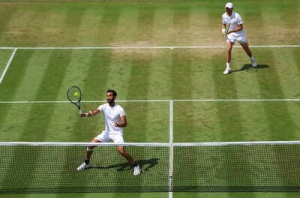 Wimbledon Upset: Bhambri & Galloway's Doubles Run Halted in Tiebreak Thriller
 Daren Sammy Fined, Receives Demerit Point for Third Umpire Criticism After Test Match
 5 Superfood Boosts for Beetroot Juice: Unlock Maximum Health Benefits